Healthcare
AI-Driven Healthcare Safety & Operational Intelligence enhances patient protection, optimizes staff workflows, and strengthens hospital-wide compliance through continuous video-based monitoring. The system proactively detects patient falls, unsafe movement, and emergency hazards, enabling rapid intervention and improved care outcomes. Intelligent zone monitoring ensures restricted areas remain secure while cleanliness, sanitation, and PPE compliance are tracked in real time. Hospitals gain deeper visibility into staff movement patterns, operational bottlenecks, and high-risk events. With automated alerts and actionable insights, healthcare facilities achieve safer environments, smoother operations, and higher-quality patient care.
AI-Enabled Patient Safety & Fall Prevention System
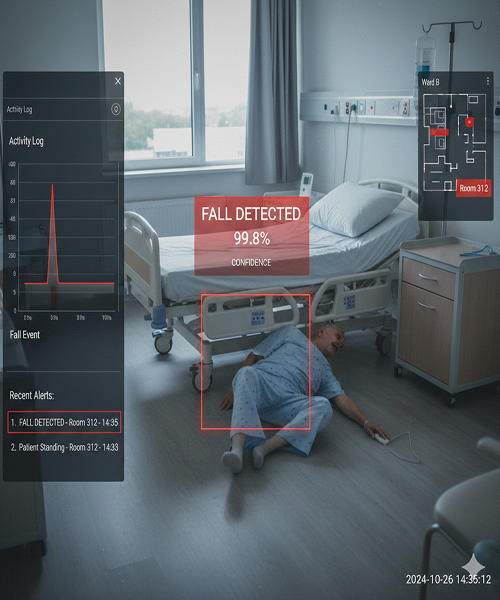
A large hospital network faced recurring patient fall incidents, especially among elderly and high-risk individuals, due to limited supervision and delayed response times. Manual monitoring by staff proved insufficient as nurses managed multiple patients simultaneously.
To address this, the organization deployed an AI-powered Patient Safety & Fall Detection system capable of identifying slips, sudden movements, or unusual patient behavior in real time. The system automatically alerts medical staff when a fall risk is detected, allowing rapid intervention and preventing critical injuries. This intelligent monitoring ensures safer wards, improved patient outcomes, and reduced liability for the facility.
- Real-Time Fall Detection
- Early Risk Identification
- Faster Emergency Response
Business Impact
- ✓Reduced fall incidents and patient injury rates.
- ✓Improved staff efficiency with automated alerts.
- ✓Enhanced trust and patient satisfaction.
Business Impact
- ✓Reduced security risks across sensitive hospital zones.
- ✓Lowered operational burden on security staff.
- ✓Increased compliance with healthcare safety policies.
Advanced Restricted Area Monitoring for Hospital Security
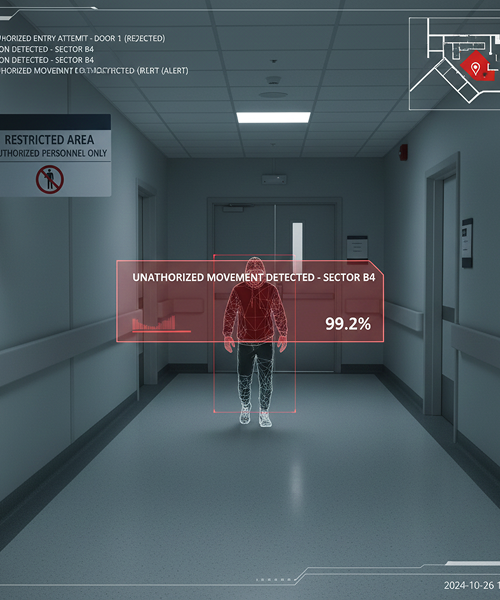
Hospitals often struggle to secure sensitive areas such as ICUs, pharmacies, laboratories, and newborn wards due to heavy staff movement and complex access policies. Manual supervision frequently results in unauthorized entries going unnoticed.
The facility implemented an AI-driven Restricted Area Monitoring system that uses intelligent cameras to detect unauthorized movement and verify access privileges instantly. The solution provides real-time alerts for policy breaches, ensuring critical zones remain protected at all times. With automated monitoring, the hospital significantly strengthened its internal security and reduced dependency on manual checks.
- Unauthorized Entry Detection
- Real-Time Zone Protection
- Automated Access Validation
Real-Time Emergency Hazard Detection & Alerting System
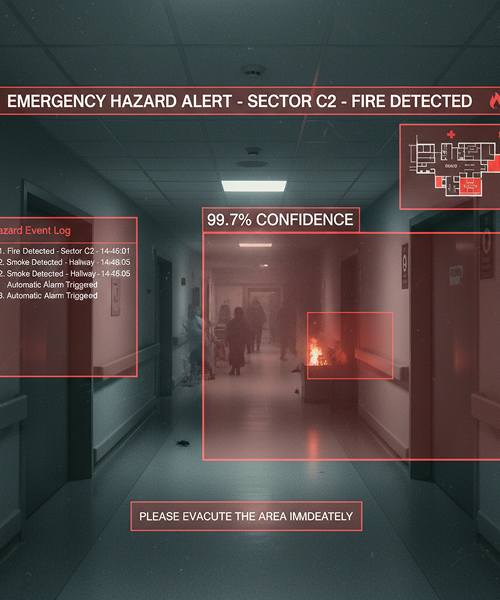
Hospitals face unpredictable emergencies including patient distress, fire risks, equipment failures, and sudden environmental hazards. Delayed detection can jeopardize patient safety and disrupt critical medical operations.
To overcome this, the organization deployed an AI-powered Emergency Hazard Alerts system capable of identifying smoke, fire, sudden motion, patient collapse, and unsafe conditions instantly. The system triggers real-time alerts to emergency teams, enabling quick intervention and minimizing damage. This proactive approach helps create a safer, more responsive healthcare environment.
- Instant Hazard Recognition
- Automated Emergency Alerts
- Rapid Crisis Response
Business Impact
- ✓Faster emergency handling, reducing critical risks.
- ✓Improved safety assurance across the facility.
- ✓Reduced downtime and operational disruption.
Business Impact
- ✓Strengthened hygiene standards across high-risk areas.
- ✓Reduced infection-related incidents.
- ✓Improved accountability for housekeeping teams.
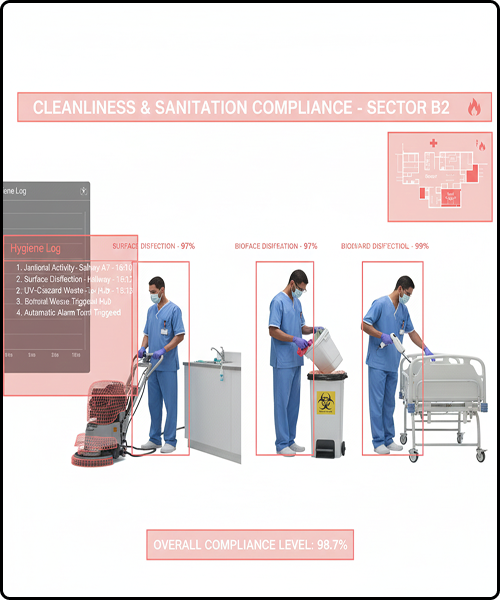
AI-Based Cleanliness & Sanitation Compliance Monitoring
Maintaining cleanliness in hospitals is crucial to preventing infections, but monitoring sanitation teams manually often leads to missed cleaning cycles and inconsistent hygiene standards.
The hospital adopted an AI-driven Cleanliness & Sanitation Compliance system that monitors cleaning routines, identifies unclean zones, and ensures timely housekeeping activities. The system also tracks adherence to cleaning schedules and alerts supervisors when sanitation requirements are not met. This ensures hygienic environments and reduces the risk of contamination.
- Automated Cleanliness Tracking
- Hygiene Compliance Monitoring
- Reduced Infection Risks
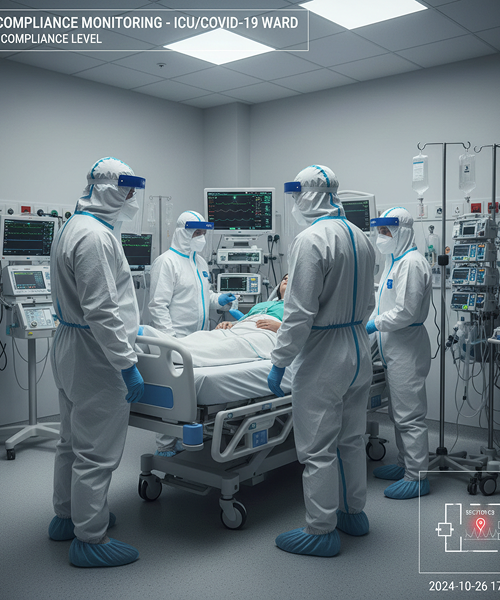
AI-Powered PPE Compliance Detection System
Ensuring PPE compliance among healthcare staff is essential, especially in high-risk zones such as ICUs, COVID wards, and operation theaters. Manual supervision often fails to detect missing masks, gloves, or protective gear.
The facility implemented an AI-enabled PPE Compliance Monitoring system that automatically identifies staff without required protective equipment using real-time video analytics. The system alerts supervisors immediately and helps enforce safety protocols consistently. This automation reduces human error and ensures safer working conditions for healthcare personnel.
- Real-Time PPE Detection
- Automated Compliance Enforcement
- Staff Safety Assurance
Business Impact
- ✓Reduced PPE violations across critical hospital areas.
- ✓Enhanced overall staff and patient safety.
- ✓Improved audit readiness and compliance reporting.