Access Control
A large enterprise facility required a more secure and efficient way to manage entry into high-risk and restricted zones. Traditional ID checks, manual gate supervision, and standalone access systems often resulted in delays, unauthorized entry attempts, and weak identity validation. The organization implemented an advanced AI-enabled access control system using multifactor authentication, ID card scanning, and real-time decision engines to verify every individual. The solution also streamlined visitor access with automated approvals and live monitoring dashboards. With centralized oversight across all entry points, the facility achieved stronger security, reduced dependency on manual checks, and full traceability of every access event.
AI-Driven Multifactor Authentication for Secure Access Control
A large industrial organization faced recurring security breaches due to reliance on single-factor authentication such as ID cards and PIN-based systems. Unauthorized badge sharing, weak verification methods, and manual checks created vulnerabilities across critical access points.
The facility implemented an AI-powered Multifactor Authentication system combining face recognition, ID validation, and rule-based confirmation to ensure only legitimate personnel gained entry. The system automatically verifies multiple identity factors simultaneously, reducing human dependency and eliminating access fraud. With real-time alerts and access logs, the organization achieved a higher security standard across all restricted zones.
- Multi-layer Identity Verification
- Zero-Touch Secure Access
- Fraud Prevention & Compliance
Business Impact
- ✓Eliminated badge sharing and unauthorized access attempts.
- ✓Reduced manual verification load at access points.
- ✓Strengthened compliance with advanced multi-step authentication.

Business Impact
- ✓Reduced manual ID checking effort significantly.
- ✓Eliminated invalid or fraudulent card-based entries.
- ✓Improved speed and accuracy of access validation.
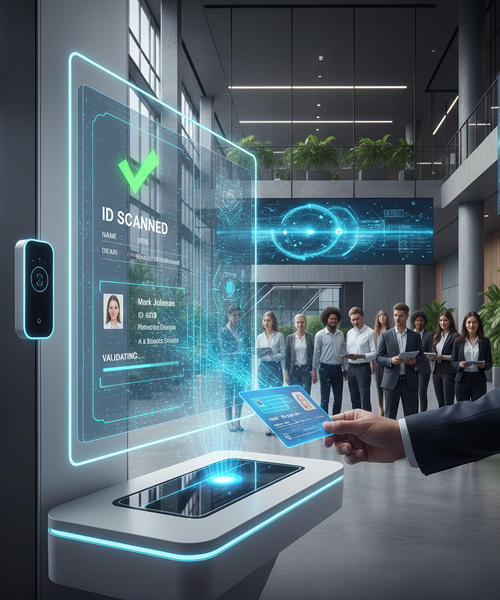
Automated ID Card Scanning & Smart Validation System
A large enterprise struggled with outdated ID card checks where guards manually inspected badges, often leading to errors, delays, and false validation. The lack of automated verification made it easy for unauthorized individuals to slip through.
The organization deployed an AI-based ID Card Scanning & Validation system, using cameras and OCR technology to read, authenticate, and match ID cards with employee databases in real time. The system instantly flags expired, mismatched, or suspicious credentials, ensuring accurate identity verification at every entry point.
- Automated ID Authentication
- Real-Time Credential Matching
- Error-Free Entry Validation
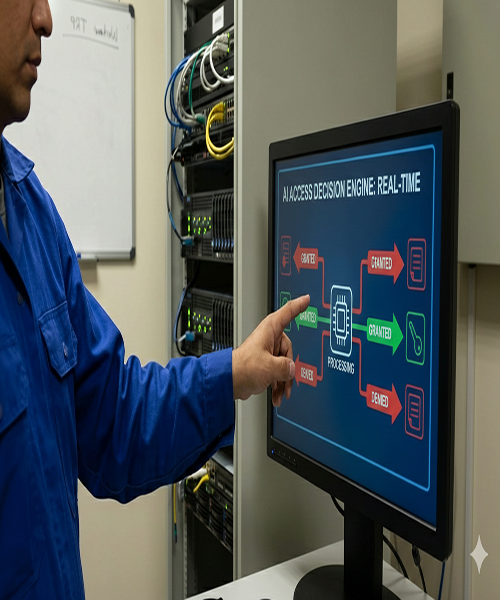
AI-Powered Real-Time Access Decision Engine
A multi-site corporation faced challenges managing dynamic access rules, shift-based permissions, and zone-specific access rights. Manual rule enforcement often caused delays and incorrect approvals.
To resolve this, the organization integrated an AI-driven Real-Time Decision Engine that evaluates identity, permissions, schedules, and risk parameters instantly before granting access. The system ensures consistent policy enforcement across all gates and triggers alerts for any unusual or unauthorized attempts, creating a smarter, faster, and more secure access workflow.
- Instant Rule-Based Access Validation
- Dynamic Permission Handling
- Intelligent Risk Detection
Business Impact
- ✓Eliminated approval delays with automated decision-making.
- ✓Increased accuracy of access rights enforcement.
- ✓Strengthened security through continuous rule validation.
Business Impact
- ✓Reduced visitor wait times and gate congestion.
- ✓Improved traceability with complete visitor logs.
- ✓Strengthened security with controlled, rule-based visitor access.
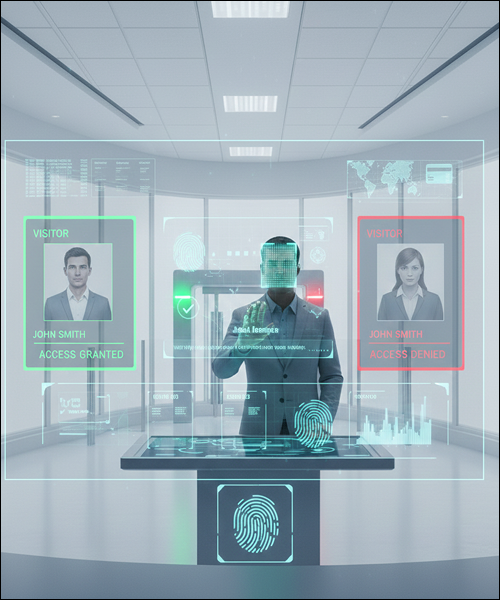
Smart Visitor Access & Verification Management System
A corporate facility struggled with long visitor queues, manual gate passes, and inconsistent identity checks, leading to operational delays and security risks.
The organization implemented anAI-enabled Visitor Access Control system that automates pre-registration, identity verification, entry approvals, and real-time tracking. Visitors receive digital passes with QR codes or face-based entry credentials, reducing manual handling and ensuring transparent access at every touchpoint. The system also logs visitor movements and restricts access based on predefined time and zone rules.
- Automated Visitor Registration
- QR/Face-Based Entry
- Real-Time Visitor Tracking
Centralized Access Monitoring & Control Dashboard
A multi-location enterprise lacked unified visibility over access events, relying on separate gate logs and isolated security teams. This fragmented approach made it difficult to detect threats, monitor activity, or take timely action.
The organization adopted a Centralized Monitoring System that consolidates access logs, identity events, alerts, and video verification from all sites into a single control dashboard. Security teams can now view live activity, analyze anomalies, and respond instantly to unauthorized attempts, ensuring better preparedness and coordinated security operations.
- Unified Access Visibility
- Real-Time Alerts & Analytics
- Cross-Site Security Coordination
Business Impact
- ✓Improved incident response time with unified monitoring.
- ✓Enabled data-driven access control decisions.
- ✓Reduced security blind spots across all locations.